What is Swarmia?

Get a demo

About Swarmia

Is Swarmia a developer productivity platform or an engineering intelligence platform?

Both. Swarmia is an engineering intelligence platform, which Gartner calls a developer productivity insight platform. Gartner previously called the category software engineering intelligence, and buyers use the names interchangeably. Other category names we commonly hear are engineering management, developer experience, engineering effectiveness, engineering metrics, and software development analytics. Whatever the label, the job is the same: connect data from the tools engineers already use, so leaders can see how work flows, where time and money go, and what to improve.

Who is Swarmia for?

Swarmia is built for engineering leaders: VPs and Heads of Engineering, Directors, and CTOs who need answers about their organization without stitching them together from fifteen different tools. Engineering managers use it for local improvements and one-on-ones, and finance teams use it for audit-ready capitalization reports. Because most data is visible to everyone, engineers use it to improve their own work, not to be watched.

What are Swarmia’s modules, and can we start with just one?

Yes. Swarmia is modular, so you can start with one use case and add more over time. The four modules are AI adoption and cost, developer experience surveys, productivity and AI, and software capitalization. The Standard plan includes all four, plus cross-domain insights such as connecting survey responses with system metrics. Read more about plans and pricing.

What is Swarmia’s approach to improving developer productivity?

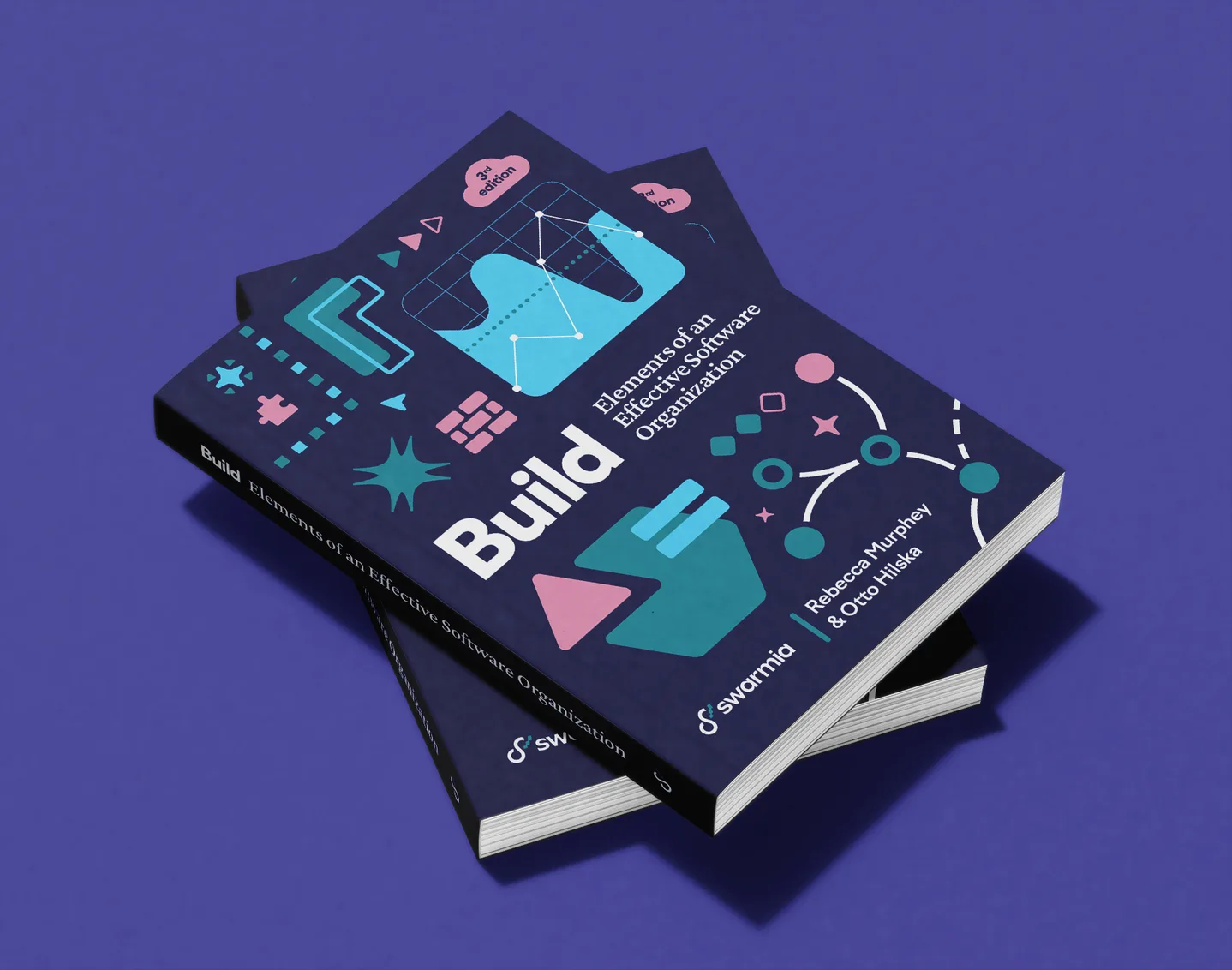
Swarmia believes engineering can produce better business outcomes (think revenue) when you fix the system people work in, not when you measure individuals harder. An engineer fixing a bug three times faster doesn’t matter much if that bug still waits ten hours on coordination, triage, and Slack threads before anyone touches the code. Swarmia’s framework splits engineering effectiveness into three areas: business outcomes, developer productivity, and developer experience. We’ve written a book called Build, which covers it in full.

Is Swarmia recognized by Gartner?

Yes. Gartner named Swarmia as a Leader in its first Magic Quadrant for Developer Productivity Insight Platforms in May 2026.

Which companies use Swarmia?

Engineering organizations from fast-growing scaleups to large enterprises use Swarmia. Our reference customers include Supabase, Miro, and Bolt.

Does Swarmia work for large enterprise engineering organizations?

Yes. Swarmia runs on one org structure and one data model across every team, so a team lead and the CTO look at the same numbers. We have a growing number of customers with 1,000+ software engineers, and can provide introductions to their engineering leaders upon request. Security and access questions, including SSO, role-based access, and data residency, are covered in the security section below.

AI adoption, impact, and cost

How does Swarmia measure the impact of AI coding tools?

Swarmia measures AI impact by comparing AI-assisted work with everything else on the same delivery metrics: cycle time, throughput, and delivery speed. You can filter any engineering metric by AI usage, so the question moves from “are people using AI” to “is AI helping us ship faster and better software.” Usage data comes from the AI tools, and delivery data comes from your code hosting platform and issue tracker.

Which AI coding tools does Swarmia track?

Swarmia tracks adoption and usage for GitHub Copilot, Cursor, Claude Code, Codex, and Devin, plus AI review tools such as CodeRabbit and Greptile. See the full list of integrations. Any other AI coding tool, including one you built in-house, can be added as a custom integration, either by linking the Git identity it commits under or by pushing daily usage data through Swarmia’s API.

Can Swarmia show what we spend on AI tools and which licenses go unused?

Yes. Swarmia shows who has access to each AI tool and who’s actually using it, side by side, so you can find and eliminate unused licenses. AI cost is shown per team and per person as the list price of the tokens used, which gives a comparable measure across tools but can differ from your bill on subscription plans or negotiated rates. Seat license costs aren’t included. Read how Swarmia calculates AI cost.

Why aren’t AI coding tools making our delivery faster?

AI coding tools speed up individual engineers, but delivery depends on the whole system around them. If review times double because there’s twice as much code to review, the gain disappears before it reaches customers. Swarmia shows where work waits: in review, in progress, or between teams, so you can see whether AI gains reach delivery or get absorbed along the way.

Can Swarmia tell which work was done with AI agents?

Yes, at the level of pull requests and files. Swarmia shows which pull requests involved an AI agent and which parts of the codebase each tool changed, without reading source code. You can browse those changes by tool and export the data for your own hotspot analysis. Swarmia doesn’t estimate the exact share of AI-written lines, because that’s hard to measure with high certainty.

Can Swarmia connect AI spend to the work it supported?

Yes. Swarmia ties AI cost to the work it produced, such as how many full-time equivalent months and how much AI spend went into a specific epic, project, or story.

How does Swarmia show whether our codebase is ready for AI agents?

Swarmia shows repository-level readiness signals, such as whether repos have agent instruction files and how those files change over time.

Engineering metrics and developer productivity

Which engineering metrics does Swarmia track?

Swarmia tracks research-backed engineering metrics, including DORA metrics, cycle time, throughput, review time, work in progress, and much more. Every metric breaks down by team, with historical trends, and you can drill into what’s driving each number.

How does Swarmia measure developer productivity without measuring individuals?

Swarmia focuses on improving developer productivity at the team and system level: how work flows, where it waits, and how fast feedback loops close. While we’ve intentionally prioritized surfacing system and team level metrics in the UI, Swarmia AI and Swarmia MCP also allow you to pull any data you’re interested in per engineer.

Can managers see individual engineers’ data in Swarmia?

Swarmia shows individual activity, such as pull requests, reviews, and issues, to everyone on the team, including the engineer, but it doesn’t score individual productivity. It doesn’t track keystrokes or screen time either. Metrics and working agreements are built around teams, because that’s where improvement happens. We’re also happy to hide any individual-focused views from the UI upon request.

How does Swarmia help teams act on their metrics, not just look at them?

Swarmia turns metrics into habits with signals, working agreements, and Slack or Microsoft Teams notifications. Teams set their own targets, like reviewing pull requests within 24 hours, and Swarmia notifies the right people when something slips. Signals surface trends, such as review times doubling on one team, before they become problems.

Can Swarmia show where engineering time goes?

Yes. Swarmia’s investment balance shows how engineering effort splits across categories of work, such as new features, maintenance, and keeping the lights on. Swarmia applies the categorization rules you define first, then uses AI to categorize the remaining issues from their descriptions and linked issues. It uses the same effort model as software capitalization, so nobody has to fill in timesheets.

Can Swarmia flag a slipping project early enough to do something about it?

Yes. Swarmia tracks initiatives, so leaders can see whether big projects are on track early enough to change course. It also shows what teams actually complete, which makes the next plan more realistic.

Can we ask Swarmia questions about our engineering data in plain language?

Yes. Swarmia AI answers questions about your engineering data in natural language, such as “which teams have the most pull requests waiting for review right now.” You can save answers as custom reports, or connect your own AI tools to Swarmia through MCP and the API.

Developer experience surveys

What does Swarmia’s developer experience survey measure?

Swarmia’s developer experience survey measures the parts of engineering work only engineers can report on. The framework has 37 research-backed questions developed with psychometrics experts, and you can freely remove any questions or add your own. Setup needs no code hosting connection, just Slack or Microsoft Teams and your team structure.

How does Swarmia turn survey results into an action plan?

When a survey closes, Swarmia gives you a heatmap by team and an AI summary with prioritized action points, so you can see where to dig in and where to celebrate. Industry benchmarks and your own historical trends show whether the changes you make are working.

Are Swarmia survey responses anonymous?

Yes. Survey responses are anonymous, and engineers can leave open comments anonymously if they want.

Can we connect survey results with engineering metrics?

Yes. On the Standard and Enterprise plans, Swarmia connects survey responses with system metrics, so you can see why a number moved, not just that it did. If cycle time spikes on a team, you can check their survey answers about code review load in the same place.

How often should we run a bigger developer experience survey?

A quarterly cadence works well for most engineering organizations. It’s often enough to see whether changes are working, and rare enough to avoid survey fatigue.

Software capitalization

How does Swarmia automate software capitalization?

Swarmia automates software capitalization by measuring engineering effort from the tools engineers already use and categorizing it with rules you define. You set what counts as capitalizable using issue tracker fields like labels, custom fields, or projects, and Swarmia applies those rules as work happens.

Do engineers have to fill in timesheets?

No. Swarmia measures effort from commits, pull requests, reviews, comments, and in-progress issue activity, so engineers never fill in a timesheet or a capitalization spreadsheet. An HR system integration accounts for part-time work, vacations, and sick leave. Engineers don’t need to touch the capitalization module at all. We also support country-specific legislation like WBSO in the Netherlands, which requires engineering managers to review their teams’ hours every two weeks.

How accurate is Swarmia’s FTE model?

Swarmia’s FTE model has been validated against traditional time tracking, and its reports hold up in Big Four audits. It weighs each type of activity, normalizes per engineer, and adjusts for time off and inactivity.

Will our auditors accept Swarmia’s capitalization reports?

Swarmia’s reports are built for audits: the approach is SOC 1 audited, and many of our customers have passed audits with Big Four firms. Every report has a full audit trail, from the top-level capitalization percentage down to individual issues and commits.

Can finance trace a capitalized number back to the underlying work?

Yes. Finance and auditors can drill down from any capitalization percentage to the features, issues, pull requests, and commits behind it. Swarmia gives FTE breakdowns per person, per initiative, and per month, while salary data stays in finance’s own systems by design.

How Swarmia compares

How is Swarmia different from other engineering intelligence platforms?

Many engineering intelligence platforms are strong at reporting, Swarmia is built so engineering leaders and teams can take action based on the data. Swarmia’s differentiation rests on three things: a shared definition of engineering effectiveness that connects metrics, developer sentiment, AI impact, and investment; a data model that produces insights you can trust; and feedback loops that turn those insights into action.

How is Swarmia different from the dashboards AI tool vendors provide?

Vendor dashboards work for managing one tool, Swarmia puts every AI coding tool into one view, in one format, organized by your teams. Vendor data usually sits at the user or API-key level, visible to one or two admins, and each tool defines “activity” differently. Those dashboards are also built to bill you, not to help you decide what to keep and what to cut.

Should we build engineering metrics in-house or buy a platform?

Building in-house can work if your platform team has time to spare, but the real question is whether maintaining it is the best use of that time. Every vendor API change, new AI tool, and reorg means more upkeep, and the hard part is trustworthy models for effort, team structure, and time off. Swarmia gives you that foundation from day one, plus an API and MCP if you want to build your own analysis on top.

How is Swarmia different from DORA dashboards in a BI tool?

A BI dashboard is a good place to start, and it gives you visibility. Swarmia adds signals, recommendations, working agreements, and notifications that make it easier to turn insights into action. Swarmia also takes care of the most difficult part, which is data modeling. Team structures, effort, and research-backed metric definitions come out of the box, so nobody has to maintain queries every time something changes.

Can Swarmia replace separate tools for metrics, surveys, and capitalization?

Yes. Swarmia covers engineering metrics, developer experience surveys, AI adoption, and software capitalization on one org structure and one data model. Specialized tools can go deep in their own lane, but they don’t talk to each other, so you can’t connect a cycle time spike to survey feedback about code review. The Standard plan includes all four modules for less than buying them separately.

Security, setup, and pricing

Does Swarmia need access to our source code?

Swarmia doesn’t process or use your source code. It works from metadata such as pull requests, commits, reviews, and file changes. Organizations with strict policies can route the connection through a proxy agent on their own infrastructure.

Is Swarmia cloud-only, or is there an on-prem option?

Swarmia is a cloud platform, with no fully on-prem version. For tighter control, you can run Swarmia’s proxy agent on your own infrastructure to isolate the connection between your tools and Swarmia.

Where is Swarmia data stored?

By default, Swarmia stores customer data in the European Union. If you require data residency in another location, please contact your account manager or email us at security@swarmia.com.

Does Swarmia send our data to AI providers, and can they train on it?

Swarmia uses OpenAI and Anthropic for AI-assisted analysis, summaries, and classifications, and neither provider is allowed to train models on your data. Swarmia doesn’t use your data, including AI inputs and outputs, to train models either. Both providers process data in the US, even though Swarmia hosts customer data in the EU by default. AI features are on by default, and you can opt out of the features that rely on these providers by emailing hello@swarmia.com. Details are on the security page.

What security certifications does Swarmia have?

Swarmia is SOC 2 Type 2 and SOC 1 Type 2 compliant. For a full list of security certifications, visit our security page.

Which tools does Swarmia integrate with?

Swarmia integrates with GitHub, GitLab, Jira, Linear, Slack, Microsoft Teams, HR systems, and AI coding tools including Claude Code, Codex, GitHub Copilot, and Cursor. Team structures can come from your code hosting platform, a CSV import, or the Team API. For a full list of integrations, visit our integrations page.

How long does it take to get Swarmia running, and what does a proof of concept look like?

Getting started with Swarmia mostly means connecting tools: your code hosting platform, issue tracker, AI coding tools, and Slack or Microsoft Teams. The data will start flowing in immediately, but can take 48 hours to backfill for larger organizations. Developer experience surveys need no code hosting connection, so they’re the fastest place to start. We offer 14-day free trials as a default but are also happy to run longer, structured proofs of concept when needed.

How much does Swarmia cost?

Swarmia is priced per engineer per month, and pricing is public. You can pay monthly or annually, and annual plans cost less than the equivalent monthly plans. The Standard plan bundles all four modules, and each module is also sold on its own. Swarmia is free for companies with up to 9 developers, and billing counts the unique team members added to teams in Swarmia.

Your gut feeling had a good run

Swarmia is engineering intelligence you can trust. See how your teams work, how they feel, and where the investment goes.